Blog

Blog

5 Axis CNC Machine Buyer Guide

5 Axis CNC Machine Buyer Guide

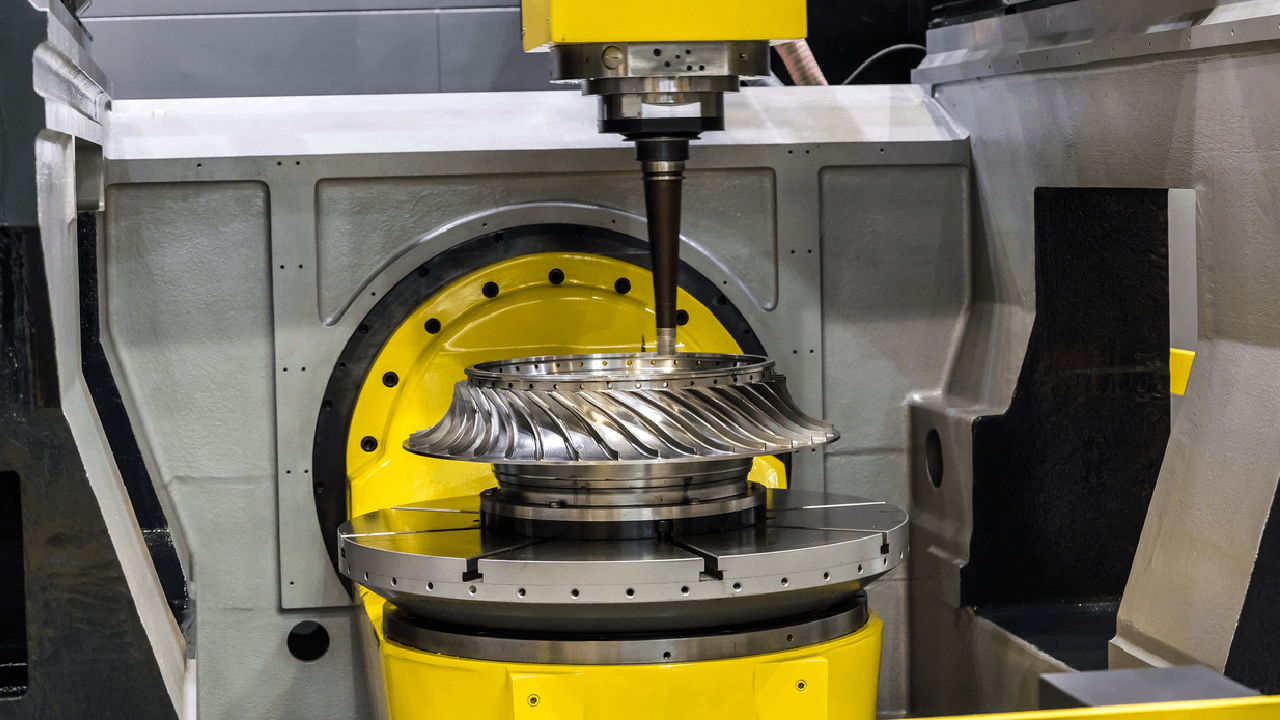
Computer numerical control machines are often referred to by their cutting capabilities, such as 3-axis, 4-axis, and 5-axis machining centers (even some have 6-axis and beyond). But a 5-axis milling CNC machine is an advanced manufacturing tool with simultaneous 5-axis operation. The ability to cut across 5-axes sets it apart from the 3-axis machines. It integrates the traditional X-Y-Z linear axes with two additional ones, the A and B axes.If you’re in the market for a new CNC machine, whether it’s a lathe, router, mill, or other type, we have a comprehensive explanation of 5-axis CNC machines and their benefits so you make the best choice.High Precision MachiningFive-axis CNC machines are more precise than 3-axis or 4-axis machines because they can move in more ways. These machines can tilt and rotate the workpiece, allowing the tool to cut from different angles in one setup. This means there’s less need to move the piece, which can cause mistakes manually. The extra movements help the tool stay in the right position, reducing errors like tool bending or shaking.Precise Surface FinishFive-axis CNC machines give better surface finishes than 3-axis or 4-axis machines. Surface finish means how smooth or rough the surface of a part is. This is important because it affects how the part looks and works. With 5-axis machines, the tool can easily reach different parts of the material, keeping the cutting smooth and even. This means less chance of leaving marks or rough spots. Also, because these machines can move in more ways, they don’t need to stop and move the part around as much. This helps keep the surface more consistent and smooth, which is important for making high-quality parts in industries like aerospace or medical devices.Common UsesThe versatility of 5-axis CNC machines is evident in their wide range of applications across diverse sectors. While 3-axis machines are capable of plenty of projects, many industriesThey are indispensable in the aerospace industry for fabricating complex geometries and precision-critical parts like aero-engine elements and airframes.In the medical field, the precision of 5-axis CNC machines is crucial for producing complex and organic-shaped orthopedic implants and medical devices. They are also instrumental in the energy sector, particularly in manufacturing turbine parts, such as those in wind turbines, where precision is key to optimal performance.Five-axis CNC machines also play a pivotal role in the automotive sector by developing and producing various components. Their advanced capabilities are particularly beneficial for creating prototypes, engine parts, and custom-designed elements integral to high-performance vehicles. The precision and ability to produce intricate designs offered by these machines are essential for the meticulous manufacturing standards required in the automotive sector.Also, in the energy field, 5-axis CNC machines are vital for producing parts for turbines, notably in wind energy. The precision and consistency these machines offer are crucial for fabricating turbine components. Accurate and finely crafted parts are essential for the efficient functioning of turbines, and the 5-axis CNC machine’s ability to produce such components reliably and efficiently makes it an invaluable asset in the energy sector, particularly in renewable energy.
2025-03-21
Read More
The Beginner’s Guide to Lathe Machines

The Beginner’s Guide to Lathe Machines

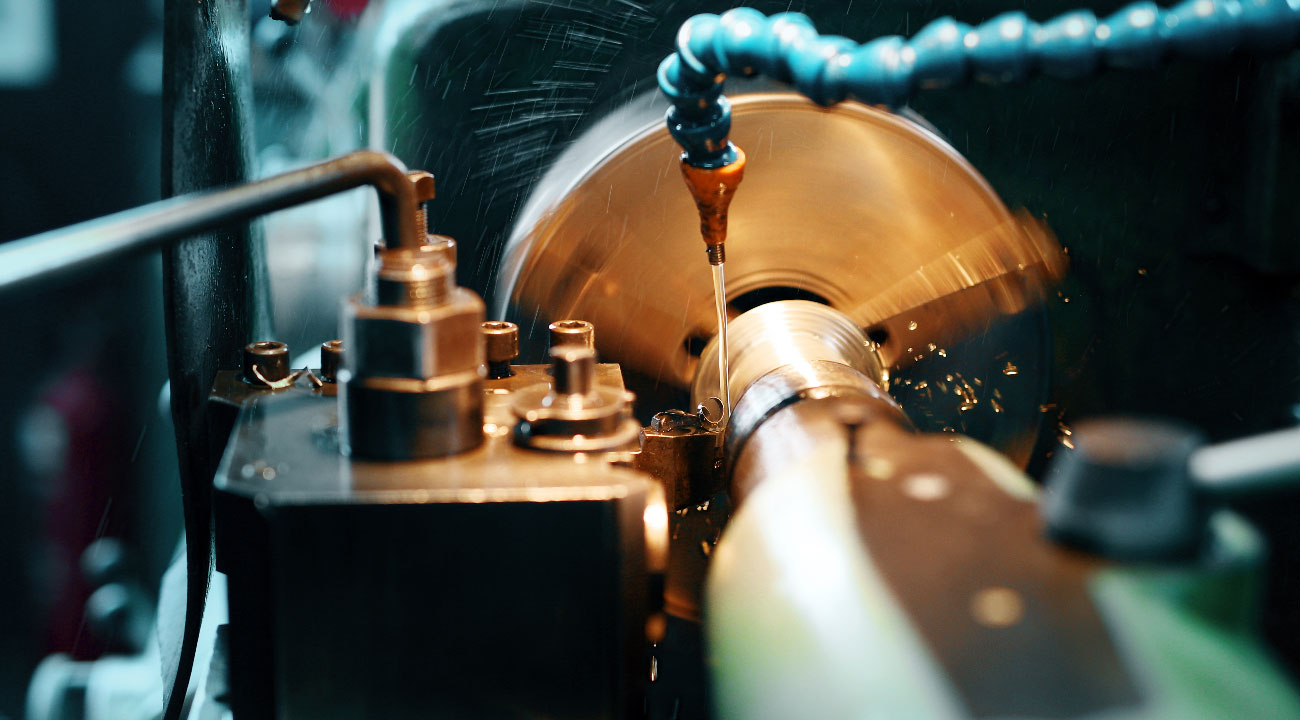
Even if you’re not intimately familiar with manufacturing and machining, you’ve probably heard of a metal lathe. These machines are quite common in machine shops, second only to milling machines in terms of popularity.You might know what lathes are but understanding them is crucial, especially if you’re a business owner, plant manager, or supervisor in charge of purchasing one.We’ll begin with the basics, helping you understand these versatile and essential machines. Then, we’ll move on to some helpful buying tips to make sure you’re ready and well-informed about your purchase.Lathe Machine BasicsAlthough most of us connect the lathe directly to the Industrial Revolution of the mid-18th century, you might be surprised to know that a lathe is an ancient tool, with evidence of its existence dating back to Ancient Egypt around 1300 BCE. Greek woodworkers around this same period also used lathes.The lathe has been a machine tool for turning operations, creating cylindrical shapes like spheres and cones. Today, lathe machines are an essential part of most machine shops since lathe work is usually an integral part of the machining process. Recently, the CNC lathe machine, a precision machine tool machinists employ for various woodturning and metalworking projects, has become the go-to lathe for machining high-volume components that require accuracy and repeatability and the most complex projects.Whether you are shopping for a manual engine lathe or power lathe, a mini-lathe that fits on your workbench, or a multi-axis CNC lathe for large-scale projects, you’re making a substantial investment, and there are things you should know before your purchase.
2025-03-21
Read More
Milling Bits Types And Their Uses

Milling Bits Types And Their Uses

Milling bits, also known as milling cutters, are tools used in manual and CNC machines for cutting into materials like metal, plastic, or wood. They spin around and shave off parts of the material to shape it or create holes. They come in different shapes and sizes, with different uses. Some are made for general cutting, while others are for certain jobs like making smooth surfaces or detailed patterns.The shank is attached to a machine that moves the bit against the material. Unlike drill bits, milling bits are used for more than just creating holes. You can use different kinds of milling bits to do different jobs, like cutting grooves, shaping the edges of a piece, or drilling holes.The type of bit you choose depends on what you need to make. If you want to cut a slot, you use one type of bit, but if you want to make a 3D shape, you use another kind. These tools are important in making all sorts of things, from simple parts to complex items used in cars and airplanes.High-speed steel (HSS) is among the most common bit materials because it stays hard even when hot, making it good for cutting at high speeds. It’s a great choice for softer materials and is quite affordable.Carbide, or Tungsten Carbide, is much harder than HSS and keeps its sharp edge longer. This makes it perfect for cutting tougher materials like stainless steel, especially at high speeds. Sometimes, milling bits have just the cutting part made of carbide, with the rest being steel. Carbide end mills are made of solid carbide and have a longer tool life than other types.Cobalt Steel Alloys, or HSS-Co, have cobalt mixed in, making them harder and more heat-resistant than regular HSS. This makes them good for tough materials and high-speed use where normal HSS would wear out too quickly.Diamond-coated bits are used for very hard or abrasive materials. Since diamond is extremely hard, these bits are very durable. Ceramic milling cutters are another option for hard materials, especially at high speeds. They can handle high temperatures well but can be brittle.Tool Steel is less common but is used for specific situations where its properties are needed. Additionally, many milling bits are coated with materials like Titanium Nitride (TiN) to make them last longer and perform better. The choice of material for a milling bit really depends on what you need to do with it, including the type of material you’re cutting, how fast you need to cut, and how long you want the bit to last.
2025-03-21
Read More
10 Types of Milling Machines You Should Know

10 Types of Milling Machines You Should Know

If you ask a machinist how they cut a slot into a workpiece, they will answer that they used a milling machine, as if that should explain everything. However, to be specific, that person should tell you which of the approximately ten types of milling machines they chose to machine that slot, why they decided on it, and whether there was another type they could have used if they had one in their shop. Who knew there were so many different types of milling machines?CNC milling machines have encroached on much of the territory that once belonged to machines that went by the name of drum milling machines, C-frame milling machines, and simplex manual milling machines.Let’s look at ten types of milling machines that still occupy floor space in the modern machine shop.1. Vertical Milling MachineThe most common type of mill, the vertical milling machine, has a vertical spindle for attaching milling cutters, such as end mills and face mills, for various milling operations. The machine is used for machining grooves, slotting keyways, producing flat surfaces, and drilling and boring holes.Vertical mills use different cutting tools with cutting edges to remove material from workpieces made from metals, wood, plastics, etc. Today, vertical milling machines have computer numerical control (CNC) and are operated manually or combined. The machine’s worktable moves horizontally right to left, in and out, and sometimes up and down but always perpendicular to the spindle axis. On some vertical mills, the table does not move up and down; instead, the spindle head moves.Prices on vertical milling machines can start at $6,000 for a desktop CNC machine for hobbyists to $500,000 for 5-axis machining centers. Used manual machines typically come in between $10,000 and $20,000 depending on their size and condition.2. Horizontal Milling MachineSome call it a plain milling machine, but for most machinists, it’s a horizontal milling machine, so named because the spindle is parallel to the worktable instead of perpendicular as with the vertical mill. However, like the vertical mills, the machine moves along three axes, but the cutting tools will be mounted horizontally.Besides the horizontal spindle, the machine also contrasts with the vertical mill in that it can use a horizontal arbor featuring different cutting tools than the vertical mills. Horizontal milling machines tend to be more rugged, and you’re likely to see them working on larger workpieces and heavy-duty roughing cutting operations.Most horizontal milling machines are of the CNC variety and used models range between $15,000 and $85,000, while a new machine will start at $150,000, depending on its size and make. You can pick up a used standard horizontal mill for a few hundred dollars up to several thousand or a new one for $200,000.3. Universal Milling MachineOne of the most versatile standard machines you can own, the universal milling machine performs various milling operations since it can be set up as a horizontal or vertical milling machine. Adding attachments such as an indexing head, slotting attachment, or rotary table increase the machine’s versatility.Many shops use the universal mill to produce tooling like milling cutters, reamers, drills, etc. Aside from the CNC milling machine, no machine on this list can perform as many machining operations. Helping this is a worktable that swivels up to 45 degrees on both sides, allowing for helical milling.A sizeable universal milling machine with 47” longitudinal movement is $130,000 new and used between $10,000 and $15,000.4. Vertical Knee Type Milling MachineThese machines are sometimes referred to as turret milling machines, Bridgeport-type mills, variable-speed vertical milling machines, or knee-and-column milling machines. However, vertical knee mills use rotary cutting tools, like end mills and face mills, to remove material from a workpiece. These cutting tools differ from the lathe machine, where the workpiece rotates, and a single-point tool removes material similar to a planer.The milling cutters are held vertically, and the workpiece is clamped in a horizontal position on the machine’s worktable. The table can be raised and lowered for Z-axis movement, or a quill can provide up-and-down movement.Vertical knee mills are easy to operate, take up little space, and offer versatility since they can double as a drill press and, on some models, can be CNC and manually operated on the same machine.Today, a new standard Series I knee mill sells for $27,000. Compare that to a new comparably-sized CNC Masters Supra Bridgeport-type knee mill at around $13,500!5. Bed Type Milling MachinesWith a bed-type milling machine, the worktable is placed on a fixed bed, allowing longitudinal movement in the X and Y axes. However, since there is no knee on a bed mill, the bed cannot move in a vertical direction. Instead, the bed mill’s vertical axis (Z-axis) is provided by the vertical spindle, enabling the bed mill to provide a 3-axis range of movement.Although bed mills and vertical milling machines are similar in construction, they are two different types of milling machines. However, bed-type milling machines are typically more rigid than knee mills and are preferred with more substantial projects and heavier workpieces.6. CNC Milling MachineAlso known as computer numerical control milling machines, CNC mills are computer-controlled and work with minimal human interaction. Cutting tools are programmed to remove material from flat or contoured surfaces, and cutting materials is typically faster than with manual machines. As a result, CNC milling machines are excellent for production work. Still, because they can machine complex shapes, they are also ideal for custom-designed parts requiring precision, detail, and a better surface finish.As with any type of machine used for milling, a CNC milling machine relies on rotary cutters moving along multiple axes to complete the milling process. Various types of CNC machines can operate on several axes (sometimes five or more) to produce the kind of complex parts you would find in the aerospace industry.CNC milling machines are vertical and horizontal machining centers with features including automatic tool changers, tool magazines, enclosed worktables, and coolant systems, all designed for high-quality machining.Excellent CNC Bridgeport-type vertical knee mills are under $15,000, while large multiple-axis machine tools could cost your company $500,000!7. Tracer Controlled Milling MachineAny metal pattern shop producing cast iron patterns for automated foundries in the 1970s had several tracer mills on their shop floor. These machines used a stylus to follow a pattern (usually made of wood and built by expert wood patternmakers) while multiple heads with ball end mills machined cast iron blocks to reproduce patterns, cams, and other contoured surfaces in cast iron or some other metal.Although tracer-controlled milling machines were standard equipment several decades ago, high-speed 3-axis CNC mills have long replaced the wooden patterns and the talented wood patternmakers who created them. Today, a CNC programmer using sophisticated manufacturing software takes the place of the patternmaker and avoids the pattern altogether.Since the tracers have lost much of their demand, you can buy them for a few hundred dollars.8. Column Milling MachinesThe column milling machine, or column and knee type, is a blanket term to cover a few of the most common machines, including vertical and horizontal milling machines. So named because the vertical column is attached to the base, and the knee is mounted to guideways allowing it to move vertically.The column is the primary supporting frame of the knee, worktable, and overarm while housing the driving mechanisms for the spindle and table feed. Column milling machines were typically used to machine car parts, but they work well for operations in various industries.Since column milling machines cover an extensive range of machines, their costs will vary from a few thousand dollars to hundreds of thousands.9. Duplex Milling MachineDuplex milling machines are a combination of two machines placed opposite one another. The two machines work separately or as a single unit when the workpiece is machined with two spindles simultaneously. Duplex spindles can move either horizontally or in vertical directions. And they can be either CNC machine tools or manual machines.10. Rotary Table Milling MachineA rotary table is an attachment fastened to a milling machine rather than a separate machine. Typically clamped to a vertical milling machine, it enables precise positioning or allows for cutting round shapes. The rotary table can be fastened either horizontally (flat) on the table or vertically, depending on the shape of the finished part. It can also be operated manually or by CNC control.

2025-03-21
Read More
Key CNC Mill Parts

Key CNC Mill Parts

In CNC machining, there are two primary types of milling machines: the vertical milling machine, with a Bridgeport milling machine being an excellent example, and the horizontal milling machine. Although the milling operations on the two styles of milling machines might vary, the milling machine parts that make them up have much in common.We’ve created a list of the essential parts of a CNC milling machine that you should know and understand, starting from the floor and moving up.What Is A Milling Machine?Milling machines, whether manual machines or CNC machines, are essential to the modern manufacturing process. They remove metal from workpieces, getting the desired shape and dimensions using a spinning tool called a milling cutter. Unlike a CNC router or CNC lathe machine, on which a workpiece spins and the cutting tool moves into it to create cylindrical shapes, the milling machine employs end mills, face mills, dovetail cutters, and various other milling cutters to machine flat and irregular surfaces, including those that are concave or convex.Milling machines are not all that complicated in theory: A machine operator fastens a workpiece to the machine tool’s work table using a work holding device, such as a clamp or vise. The workpiece is moved through the X and Y-axis as the milling cutter removes the material and a skilled worker or CNC program directs it on a manual or CNC milling machine.CNC ControllerAt the heart of a CNC mill is the CNC controller, a sophisticated computer system that converts a digital design into commands that drive the machine’s movements. The controller interprets G-code or other programming languages, outlining the tool paths and movements necessary to create the desired part. It precisely controls aspects such as speed, feed rate, and coordination of the spindle and tool changer. The CNC controller is the interface through which operators input data, monitor the milling process, and make adjustments as needed. Advanced CNC controllers also offer features like real-time feedback, error detection, and adaptive control, enhancing the precision and reliability of the milling process.Column and BaseThe cast iron column and base support the other parts of the milling machine operations. The column rests on the base and typically houses the oil and coolant system. The base is the foundation carrying the weight of everything on the machine, while the column takes the direct weight of the knee and work table. The weight of these two components ensures there is minimum vibration and better surface finishes even after the heaviest cuts.Control PanelThe control panel on a CNC mill is where the operator runs the machine. It has buttons, switches, and usually a screen to show information. The operator uses it to start and stop the mill, control how fast it moves, and pick different ways to use the machine. The screen shows important details like the path the tool is taking and if there are any problems. In modern CNC mills, the control panel can be quite advanced, letting the operator program the mill, see what’s happening as the machine works, and even try out the milling process virtually before actually starting.Automatic Tool Changer (ATC)The tool changer is a critical component of a CNC mill, serving as the mechanism that automatically switches between different tools during the machining process. This feature is essential for complex operations requiring multiple tools, such as drilling, milling, and tapping. The tool changer operates under the control of the CNC system, allowing for seamless transitions and minimizing manual intervention. It typically consists of a magazine or carousel that holds a variety of tools and a robotic arm or other mechanism for selecting and changing the tools. The efficiency and capacity of the tool changer are crucial for high-volume production, as they significantly reduce setup time and increase the overall efficiency of the milling process.KneeThe knee is attached to the column by dovetail ways and is supported and adjusted up and down by an elevating screw, also called a vertical positioning screw, running vertically from the base. The vertical movement can be achieved by either a hand crank or power feed. The handle to move the saddle in the transverse direction (cross feed, or in and out) is also located on the knee, while the gearing mechanism is enclosed within the knee. Some milling machines have power table feed in the transverse direction, and that unit is on the knee, as well.The saddle is on top of the knee moving transversely to the column and providing motion in a horizontal direction to the workpiece. It is also made of cast iron.Power Feed MechanismThe power feed mechanism is contained in the knee. The power feed mechanism is used to control longitudinal (left and right), transverse (in and out), and vertical (up and down) feeds. Feed rates are changed for some knee milling machines by turning the speed selection handle. Most milling machines have a rapid traverse lever to provide a temporary increase in the speed of the longitudinal, transverse, or vertical feeds.Work TableAs its name suggests, most of the machining work happens on the work table. The table is a rectangular piece of cast iron with T-slots for clamping a workpiece directly to it or fastening a vise or other work holding device to hold smaller parts and machine them safely and efficiently.The longitudinal variable speed power feed and handles are part of the work table. In addition, an X-axis leadscrew under the table engages with a nut and assists the table in moving horizontally, either under power or manually.
2025-03-21
Read More
Is a DIY CNC Mill a Good Idea?

Is a DIY CNC Mill a Good Idea?

CNC machines, particularly CNC mills and lathes, have transformed the manufacturing industry, enabling precision cutting and shaping materials with unprecedented efficiency. However, these industrial powerhouses can seem intimidating and inaccessible to the average hobbyist, DIY enthusiast, or part-time machinist. This perception is changing with the advent of DIY CNC mills, bringing this innovative technology into garages and home workshops worldwide.This article focuses on CNC milling machines – we’ll save the discussion of DIY CNC routers and 3D printers for another day. Undeniably, a DIY CNC milling machine would be one of the most accurate and versatile DIY CNC projects, capable of machining cast iron or handling a woodworking task while maintaining close tolerances. They level the playing field by bringing the power of factory-grade machines into the hands of beginners and seasoned machinists alike.Building your own CNC machine can be cost-effective for those with technical skills and a do-it-yourself spirit. The total cost significantly depends on your design choices such as the working area size, materials, and type of motor you choose.The out-of-pocket cost of a homemade CNC mill may be less because your own labor is “free”. Construction of a mini-mill is labor-intensive, so if you can earn $30+ per hour elsewhere, purchasing a quality benchtop or desktop CNC mill from a reputable manufacturer might make more sense.When considering costs, be aware that the higher upfront cost of a manufactured CNC mill often includes features like customer support, warranties, and software compatibility that DIY machines may lack. It’s essential to look beyond the initial expenses and factor in labor, maintenance, part replacements, and potential troubleshooting time.
2025-03-21
Read More
What is Electrochemical Milling?

What is Electrochemical Milling?

Electrochemical machining (ECM) is a unique fabrication technology that leverages the principles of electrolysis for material removal processes. Unlike conventional machining methods, ECM is non-contact, using an electrolyte fluid and a cathode tool to remove material from a workpiece anode. This method’s distinct advantage is that it does not produce heat – eliminating thermal damage and stress often experienced in traditional machining processes.ECM is especially suited for precision machining complex geometries and hard materials, including those alloys, such as Inconel, that are typically challenging to machine with conventional methods. Electrochemical milling is used in the aerospace and automotive industries – among many others – to create intricate components. In a relatively recent process, ECM’s ability to produce high-precision parts with superior surface finishes has begun to establish a specific role in manufacturing.How Does the Electrochemical Machining Process Work?ECM is a unique process that leverages electrolysis for metal removal. It is used predominantly for tough or complex materials that are challenging to machine using conventional methods.In the ECM process, the workpiece to be machined becomes an anode (positive electrode), while the tool is a cathode (negative electrode). The power supply connects the cathode and anode to its negative and positive terminals. The tool and workpiece are submerged in an electrolyte solution, usually an aqueous sodium chloride (NaCl) or sodium nitrate (NaNO 3) solution, and the electrolyte flows through or around the tool head. When direct current passes through the workpiece material, its surface ions are gradually dissolved due to electrolysis, resulting in the desired shape.The ECM process does not involve any mechanical contact between the tool and workpiece, making it a nontraditional machining process. This means there’s no heat generation, which provides a distinct advantage as it prevents thermal damage to the workpiece. Furthermore, the small interelectrode gap eliminates tool wear, allowing for consistent machining accuracy even for high-volume production.How Does the Electrochemical Machining Process Work?ECM is a unique process that leverages electrolysis for metal removal. It is used predominantly for tough or complex materials that are challenging to machine using conventional methods.In the ECM process, the workpiece to be machined becomes an anode (positive electrode), while the tool is a cathode (negative electrode). The power supply connects the cathode and anode to its negative and positive terminals. The tool and workpiece are submerged in an electrolyte solution, usually an aqueous sodium chloride (NaCl) or sodium nitrate (NaNO 3) solution, and the electrolyte flows through or around the tool head. When direct current passes through the workpiece material, its surface ions are gradually dissolved due to electrolysis, resulting in the desired shape.The ECM process does not involve any mechanical contact between the tool and workpiece, making it a nontraditional machining process. This means there’s no heat generation, which provides a distinct advantage as it prevents thermal damage to the workpiece. Furthermore, the small interelectrode gap eliminates tool wear, allowing for consistent machining accuracy even for high-volume production.
2025-03-20
Read More
13 Gifts Every Machinist is Sure to Love

13 Gifts Every Machinist is Sure to Love

The quest for the ideal gift can be tricky for those with a machinist among their loved ones. Machinists have unique interests and preferences, often leaning towards practical and functional items to use in their work.Whether you’re searching for a gift that supports their machining craftsmanship or one that acknowledges their passion, many options are available online and in stores. Here are 13 gift ideas that are sure to be a success for Christmas, a birthday, or another special occasion – five of these machinist gifts are on the low end (<$50), five are mid-level ($50 to $150), and three are on the higher end ($150+). Put a smile on your machinist’s face this year!A Vernier caliper keychain is under $10, and it’s an ideal gift because machinists often use Vernier calipers to provide precise measurements, making this keychain a novelty item and a symbol of their profession. It serves as a constant reminder of their skills and passion, and as a keychain, they can carry it daily. Furthermore, it’s a small, affordable, thoughtful gift showing you understand and appreciate their metalworking (or woodworking) craft.A funny t-shirt makes an excellent gift for a machinist for a multitude of reasons:It adds a dash of humor to their often challenging and technical routine, acting as a conversation starter and a catalyst for workplace camaraderie. It can break the ice and lighten the mood in the machine shop.It’s a practical, functional gift that they can wear regularly. A t-shirt with a witty slogan or joke related to their profession shows thoughtfulness, demonstrating that the giver understands and appreciates the skill involved in their work.This gift serves as a token of recognition and respect towards the machinist’s craft, all while keeping things light-hearted and fun.
2025-03-21
Read More
A Beginner’s Guide to Tight Tolerance Machining

A Beginner’s Guide to Tight Tolerance Machining

In precision engineering, tight-tolerance machining is a cornerstone for manufacturing processes where accuracy is not just a requirement but the lifeblood of functionality and quality control. This technique ensures components fit together flawlessly, performing at peak levels for aerospace, medical devices, and automotive applications where the line between success and failure can be as fine as a human hair.In this article, we will examine what tight-tolerance machining entails, why it’s essential, and how to achieve it with all machine tools and in every machine shop.What Does Tight Tolerance Mean?Tight tolerance machining is a manufacturing process in which precision parts are produced with precise measurements. In this context, ‘tolerance’ refers to the allowable limit of variation in a physical dimension, and ‘tight’ tolerance means that this variation is minimal, often down to a thousandth of an inch or less. This extreme precision is critical in industries where even the smallest deviation from product design specifications can significantly affect the product’s performance, safety, or functionality. Aerospace, medical, automotive, and military sectors often require tight-tolerance parts because they are integral to the safety and functionality of their products. Achieving such precision requires advanced machinery, skilled operators, and meticulous quality control. Failure to adhere to these rigorous standards can compromise the integrity of the final product, highlighting the importance of tight tolerance machining in high-stakes applications.Why Are Tighter Tolerances Necessary?Precision machining of components ensures they accurately reflect the intended design specifications. When tolerances are stringent, the performance and reliability of these parts are significantly improved.Consider the aerospace and automotive sectors, where high-precision parts require very tight tolerances. They guarantee that components fit together perfectly and operate according to their part design.In contrast, if tolerances are too generous, there is a risk of improper fitting which could severely affect performance and pose safety hazards.Manufacturers can achieve repeatability in dimensions, shapes, and other critical factors by utilizing tight-tolerance CNC machining techniques. This precision is especially vital in the medical device industry where part accuracy is synonymous with patient safety and product effectiveness.Beyond enhancing product integrity, a strict tolerance CNC machining process brings efficiency gains to the manufacturing workflow. High-precision CNC machines can produce parts faster while reducing material wastage, saving time, and cutting costs which directly benefits the client with speedier lead times and lower prices.How Can Machinists Achieve Even the Tightest Tolerances?Machinists must adopt a meticulous and systematic approach to achieve the tightest tolerances. Precision machined parts result from several factors, including the machinery’s quality, the machinist’s skill level, the material used, and the techniques applied.Machinery QualityCNC machines offer advanced capabilities suitable for complex parts, but many machine shops still rely on conventional manual machines. These machines must be well maintained and equipped with devices, such as digital readouts (DRO), for milling and drilling accurately on milling machines and lathes.
2025-03-20
Read More
9 Ways to Fill Large Holes in Wood

9 Ways to Fill Large Holes in Wood

When working with old wood, it’s often necessary to repair damages such as large holes resulting from rot or poor craftsmanship. Whether you’re diving into a detailed tutorial on advanced woodworking or simply tackling the neverending home improvement list, understanding wood filling is essential. Here are nine commonly used methods to help any DIY-er fill voids and large holes in various types of wood.Wood PuttyUnderstanding the wood grain and types of wood you’re working with can influence your choice of wood filling methods. Wood putty is a compound designed for repairing holes in wood. It’s available both pre-made and as a powder that you mix with water. Its color closely resembles wood, making it ideal for blending in holes when the wood grain remains visible, like on wooden furniture.Although there’s a tutorial on creating your own wood putty using drywall compound and fine sanding dust, many opt for off-the-shelf wood filler putty. While wood putty isn’t the only option for wood filling, it’s among the most popular for filling voids, especially small ones like screw holes in visible locations.How to Use Wood Putty:Clean the hole of debris. For deep holes, deepen them slightly using a chisel to ensure the putty fills them entirely.Follow the package instructions to mix the wood putty. If it’s in powder form, add water until achieving a thick paste consistency.Use a putty knife to fill the hole, applying light pressure in a back-and-forth motion.Smooth the putty’s surface with the knife, removing any excess.Allow the putty to dry, typically around 24 hours.Sand the dried putty with fine-grit sandpaper or an electric sander until smooth. Finish with stain or other products as necessary.Epoxy is versatile for filling wood holes, with the best method depending on the hole’s size and shape. Epoxy adheres to wood’s pores and fibers similarly to dyes or varnishes. Most hardware stores carry two-part epoxy kits, which include a hardener to mix with the resin, resulting in a durable, waterproof filler.For small holes, a putty knife or epoxy ball suffices. For larger holes, consider mixing in sawdust or wood shavings to form a paste. Once the epoxy dries, sand it flush with the wood’s surface. Then, paint or varnish as needed.Epoxy can also be mixed with sawdust for larger or deeper holes. While epoxy requires some skill, it’s perfect for extensive damage or severely rotted wood.Shellac sticks, also known as burn-in sticks, are solid sticks of colored shellac that can be used to fill small imperfections in wood, including holes, dents, and scratches. They come in various colors to match different types of wood and their respective wood grain.How to Use Shellac Sticks:Clean the hole to ensure it’s free of debris and dust.Heat a burn-in knife (or a regular knife if you don’t have one) using a propane torch or alcohol lamp.Touch the heated knife to the shellac stick to melt a small amount.Drip the melted shellac into the hole, slightly overfilling it.Allow the shellac to cool and harden.Use a scraper or razor blade to carefully remove the excess, making it flush with the wood surface.Buff the area with fine steel wool or sandpaper to blend it in.Finish with a coat of wax or polish to enhance the shine and match the surrounding area.
2025-03-21
Read More
What Is A Jewelers Lathe?

What Is A Jewelers Lathe?

Jewelry making and watch repair is an intricate business that requires precision and extreme attention to detail. At the heart of this craftsmanship lies a machine tool that has been pivotal in shaping, turning, and crafting delicate pieces: the jewelers lathe. These machines, though small, are a significant part of modern jewelry making. Let’s dive into what they are and what features and benefits they offer.Understanding the Lathe MachineA lathe is a machine tool that rotates a workpiece around an axis to perform various operations such as cutting, sanding, knurling, drilling, or deformation. The primary purpose of any lathe is to produce symmetrical objects about a central axis. While there are many types of lathes, such as the wood lathe, metal lathe, and mini lathe, the jewelers lathe, often referred to as a watchmaker’s lathe, is designed explicitly for intricate work on small pieces.What types of jewelry can a lathe make?A jewelers lathe is instrumental in crafting countless jewelry pieces. This machine tool is pivotal in creating and refining rings, aiding in shaping bands, setting stones, and engraving intricate patterns. It can craft all of the following and more:Earrings, whether studs, hoops, or dangles, benefit from the lathe’s ability to shape, size, and polish.Necklaces and pendants see their form and elegance enhanced, with the lathe assisting in shaping pendants, engraving details, and crafting the bails that attach them to chains.Bracelets, bangles, and even the charms that adorn them are shaped and sized to perfection.Brooches, pins, and the mechanisms that make them functional are crafted with precision, as are the bodies and mechanisms of cufflinks.Even tie clips, bars, and various jewelry components like clasps, jump rings, and connectors can be meticulously crafted or refined using a jeweler’s lathe.Jewelers Lathe vs. Watchmakers Lathe: Is There a Difference?What is a jewelers lathe used for?A jeweler’s lathe is primarily used in jewelry making. It assists in crafting intricate designs, shaping gemstones, and creating high-quality jewelry pieces. With its precision, jewelers can achieve detailed work on metals and other materials, ensuring that each piece stands out with its unique design.What is a watchmakers lathe used for?On the other hand, a watchmakers lathe is tailored for watch repair and clock repair. It’s a mini lathe designed to handle the tiny parts found in watches and clocks. With tools like the graver and the collet, watchmakers can perform tasks like threading, turning, and milling with utmost precision.What is the best lathe for clock making?A turning lathe that offers variable speed and comes with a range of lathe tools is ideal for clock making. Brands like Bergeon, Levin, and Lorch are renowned for producing high-quality lathes suitable for clockmakers.What is the difference between a watchmakers lathe and a jewelers lathe?While both lathes are designed for precision work, the primary difference lies in their application. A jewelers lathe is more versatile and suitable for jewelry-making tasks. In contrast, a watchmakers lathe is specialized for working on the minute components of watches and clocks.Key Components of the Jewelers LatheA jewelers lathe is designed for the intricate and delicate work required in jewelry making and watch repair. While the fundamental principle of a lathe—rotating a workpiece around an axis for various operations—remains consistent across different types of lathes, there are certain features and specifications unique to a jeweler’s lathe:Headstock: This is the stationary end of the lathe, housing the main spindle and often driven by a motor. The headstock ensures the workpiece is held securely and rotates at a consistent speed.Collets: While other lathes use chucks to hold workpieces, jeweler’s lathes primarily use collets. Collets provide a more accurate centering of small workpieces and can grip them without causing damage.Tailstock: Positioned opposite the headstock, the tailstock supports the other end of the workpiece, especially during operations like drilling.Tool Post: This holds the tools, like the graver or turning tool, in place, allowing them to interact with the workpiece.Lathe Chuck: This component holds the workpiece securely. There are different types, including the 3-jaw chuck and the drill chuck.Mandrel: A shaft or spindle to which the workpiece can be attached.Lathe Features to Look ForVariable Speed: A variable speed feature allows the machinist to adjust the rotation speed of the workpiece, ensuring optimal results for different tasks.High-Quality Design: Given the precision required in jewelry making and watch repair, investing in a high-quality lathe is essential. Vintage lathes from brands like Boley, often found on eBay, are known for their durability and precision.Specialized Attachments: Jeweler’s lathes can come with or accommodate a range of specialized attachments tailored for jewelry-making or watch repair, such as gravers, burnishers, or specific polishing tools.Machine Tools: Ensure the lathe has machine tools, including carbide tools, shanks, and microscopes for detailed work.CNC Machine Integration: Modern lathes come with CNC (Computer Numerical Control) capabilities, allowing for automated and exact operations. The CNC machines let you craft jewelry with precision and speed.Benchtop or Bench Lathe: These compact small lathes can be placed on a bench, making them suitable for DIY enthusiasts and small workshops.For seasoned jewelers, clockmakers, or budding enthusiasts in metalworking and woodworking, grasping the nuances of the jeweler’s lathe is essential. This tool embodies human innovation, enabling us to create detailed works that are not only functional but also with art and skill. If you’re thinking of investing in a machine, prioritize its build quality, the diversity of its tools, and its adaptability to contemporary technologies like CNC machines.
2025-03-21
Read More
Guide To Selecting the Best Rotary Table for Your Milling Machine

Guide To Selecting the Best Rotary Table for Your Milling Machine

Rotary tables can be an integral component of milling machines because they add significantly to the machines’ versatility and precision. Often seen as a fourth axis, they are attached to the machine’s worktable and provide the capability to cut workpieces along multiple axes. They can rotate workpieces at various speeds, accommodating a wide range of milling tasks and enabling intricate, complex designs to be machined.Adding a rotary table to a milling machine provides several advantages to your machinists. Having another axis to work with gives milling machine users more precision and accuracy without changing part positions.Also, an additional axis makes any milling machine more versatile. As a lathe machine enables the creation of cylindrical-shaped parts, a rotary table provides some of the same benefits. It offers more precision to a complex design, reducing time and costs for producing specific components.Understanding the functionality and advantages of rotary tables is crucial for anyone involved in the metalworking or woodworking fields. These devices offer superior precision in milling operations and allow for efficient mass production, making them an indispensable tool in any machining setup. This article explores the intricacies of rotary tables on milling machines – and highlights their operation, benefits, and pivotal role in the broader manufacturing context.What does a rotary table do?A rotary table can be an invaluable asset in the milling process, offering a multitude of uses that enhance accuracy, versatility, and efficiency. It enables precise machining of complex parts by rotating the workpiece at fixed intervals to machine multiple sides without manually repositioning the piece, ensuring precision and uniformity.Operates horizontally and verticallyPart of the rotary table’s versatility lies in its capacity to be used horizontally and vertically, paving the way for various applications in various fields. When used horizontally, it offers a stable platform for machining radii and angles, while the vertical rotary table can be used with an indexing plate for precise machining of gears or to drill bolt hole circles around the circumference of a component or part. This dual horizontal & vertical orientation usage not only maximizes space, but also enhances productivity and creativity.Allows for creation of larger partsAlso, the milling rotary table permits the creation of larger parts that would otherwise be impossible to produce on a standard milling machine. Through indexing, machinists can cut large-diameter components such as oversized wheels and gears with unparalleled precision. Using the rotary table in a horizontal orientation even allows machining large diameters on smaller machine tools.Machines complex and intricate parts more easilyIn addition to machining complex parts, the rotary table can create intricate patterns made possible by moving the table at precise angles or increments. For example, creating gear teeth requires precise, angular cuts, accomplished easily with a rotary table.Creates accurate circular featuresFurthermore, the rotary table can drill equidistant holes on a circular path. This operation, otherwise difficult to accomplish, is done smoothly with the help of a rotary table, which accurately positions the workpiece for the drilling operation.Rotating the workpiece against a cutting tool allows shops to use it to cut perfect arcs and circles. This capability proves particularly useful in industries such as automobile and aerospace, where parts often require accurate circular features.Additionally, the use of a rotary table in milling extends to the creation of spiral features. By coordinating the movements of the milling machine and the rotary table, companies can produce spiral features such as the threads of a screw.A precision rotary table on a milling machine serves as a versatile tool that enhances the capabilities of the milling process. It provides the means to machine complex pieces, large parts, intricate patterns, equidistant holes, arcs, circles, and helical features with precision, thereby broadening the scope of possible applications of a manual or CNC milling machine.How do rotary tables work?Many rotary tables are manually operated, although tables under the control of CNC machines also offer a fourth axis to CNC mills. Rotary tables have a heavy-duty base that allows clamping onto another table or fixture. The table on which the workpiece is clamped is precision machined, and T-slots are typically provided for workholding purposes.Rotary tables are typically mounted flat, meaning the table rotates around a vertical axis. It can also be positioned on its end to rotate about a horizontal axis.A through hole, machined in the table’s center, allows for a Morse taper arbor, center, or fixture. Many models can accommodate a 3-jaw chuck for even more convenient part holding. The table rotates freely to enable indexing, and a worm or handwheel controls it. High-precision tables come with duplex worms to compensate for backlash.
2025-03-21
Read More

Leave a Message

8618724037068

info@trade-orders.com

Facebook

Twitter

Youtube

Instagram

LinkedIn

TikTok

Wechat